
Schema.org contains hundreds of types, but a typical website only needs a handful of them. Choosing the right ones, and linking them together, matters more than adding as many as possible. This article walks through the types that are worth creating first and explains how they relate to each other. You can create most of them for free with the generators on this site.
Start with the entities behind the site
Every website is published by someone. Describing that someone is the most useful first step, because all other markup can then point back to it.
- Organization: a company, brand or institution, with its name, logo, official profiles and contact points. Use our Organization schema generator for it.
- Person: an individual such as a founder, author or professional, with a job title and profiles. Create it with the Person schema generator.
- LocalBusiness: a more specific kind of Organization for businesses with a physical location and opening hours.
Describe the site and its pages
- WebSite: the site as a whole, with its name, address and language. See the WebSite schema generator.
- WebPage and AboutPage: the single page and its role, such as the page that is about the company.
- BreadcrumbList: the path from the home page to the current page, which Google can show in results.
Describe what you publish and sell
- Article: a blog post or news item, with author, publication date and image.
- Product and Offer: an item for sale with its price and availability. Use the Product schema generator.
- Service: work you perform for customers. See the Service schema generator.
- Book: a published work, linked to its author. Try the Book schema generator.
- Event: a dated occurrence with a place and organizer.
How the types connect
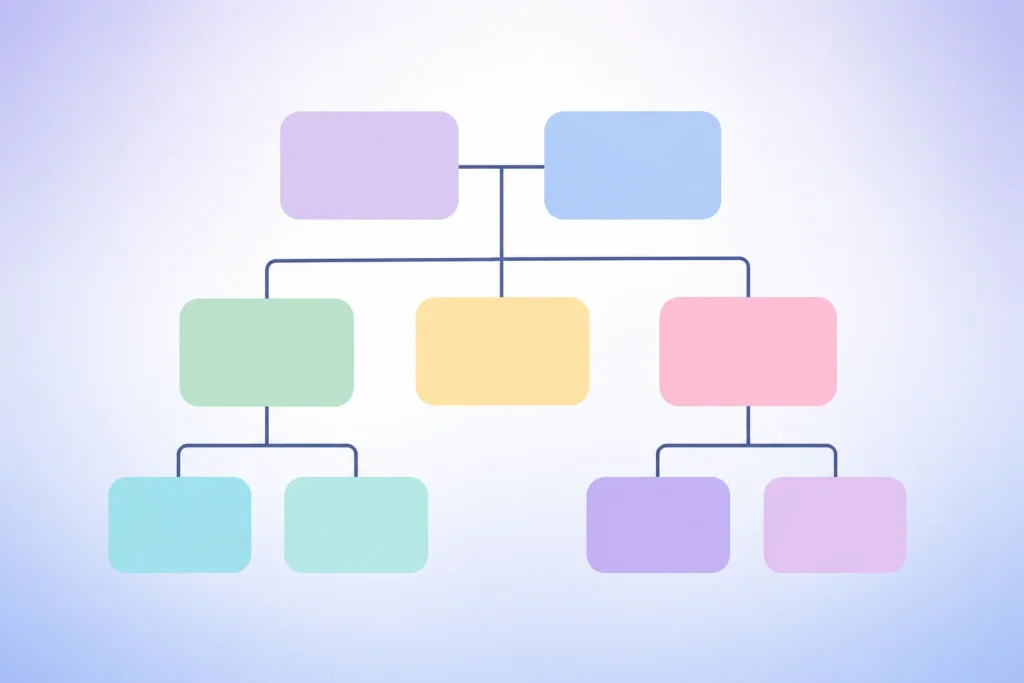
Schema.org types form a hierarchy that starts from a generic type called Thing. Organization, Person, Product and Event are all kinds of Thing, and they are connected by properties. A WebSite has a publisher, which is an Organization. An Organization has a founder, which is a Person. A Book has an author, which is a Person. A Product has a brand and offers.
The best way to express these relationships is to give each entity an identifier and refer to it from the other blocks, instead of copying the same data again and again. This is the idea behind linked schemas, and it is also how Google builds a clear picture of an entity. The role of the main page for an entity is explained in what is a Google entity home.
A sensible order of work
- Create the Organization or Person that owns the site.
- Create the WebSite and link its publisher.
- Add Article, Product or Service markup to the pages that need it.
- Validate everything, as explained in our guide to the schema markup validator.
For the complete and current list of types and properties, always consult the official schema.org website, since the vocabulary is updated regularly.
Related guides
- What is schema markup and why it matters
- JSON-LD vs Microdata vs RDFa
- The sameAs property explained
- Linked schema markup with @id
- Structured data errors in Search Console
- Does schema markup help SEO?
- Brand reputation checker: how to use the free tool
- Organization vs LocalBusiness schema
- Brand SERP: how to control what Google shows for your name
- Author schema markup: connect a Person to their books
- About this free tool