
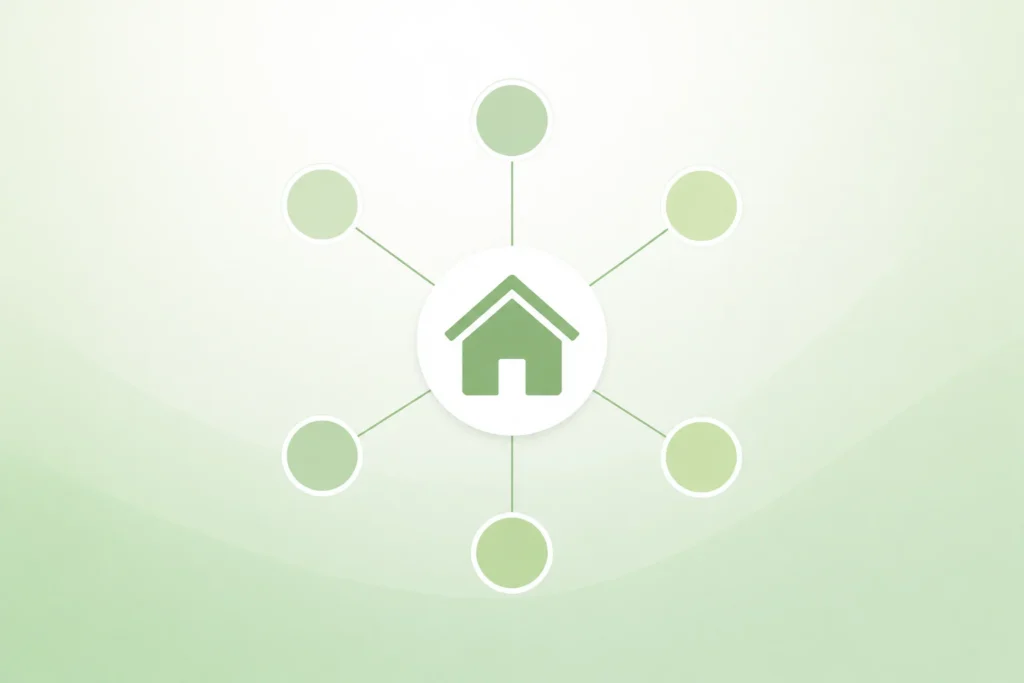
An entity is a specific thing that can be identified and described: a person, a company, a book, a place or an event. Google keeps information about entities in its Knowledge Graph. An entity home is the web page you choose, and make as clear as possible, to be the main reference about that entity. The term comes from the SEO community rather than from official Google documentation, but the idea is simple and useful.
Why an entity needs a home
Information about a brand is usually scattered across a website, social profiles, directories and articles. When these sources disagree or never point to a common place, Google has to guess which facts are right. A single entity home gives search engines a starting point: the page where you state your name, what you do and which other pages are really yours.
Which page to choose
- For a company, the home page or a dedicated About page on its own website.
- For a person, the About page of their personal website, not a social profile.
- For a book or product, the page on the official site that presents it.
Pick one page and keep it stable. Changing the entity home often weakens the signals you have built.
What to put on the entity home
- A clear text description of the entity, with its full name and a short factual summary.
- Links to your official profiles, which are the same ones listed in the sameAs property of your markup.
- Structured data that describes the entity, such as an Organization schema for a company or a Person schema for an individual.
- The same name, logo and description used on every other profile.
How it connects to a Knowledge Panel
An entity home does not create a Knowledge Panel by itself, but it is one of the foundations. Once the home is clear and your profiles point back to it, Google can reconcile the scattered information into one entity. Read how to earn a Google Knowledge Panel for the other signals, and use the free generators on this site to produce the markup for your home page.